 Movement Ecology
We are the Movement Ecology Collective
Facilitators, trainers and researchers helping social movements build power across their differences.
Who we are
We are Linda Doyle and Wolfgang Wopperer. We are based in the south of England – Linda in the south-west, Wolfgang in London – and work with movements across the UK, and sometimes beyond.
We are explicitly political, and we work across tendencies and sectors: climate groups and social justice campaigns, unions and the traditional left, grassroots collectives and NGOs. Much of our work is bridging – bringing together groups that would not otherwise meet, and helping them find what they can do together.
At the centre of it is a question about power: how the current order holds together, where it is breaking down and how movements can build alliances strong enough to shift it. Our way into that question is hegemony theory, from Antonio Gramsci to Stuart Hall.
We do this through training, facilitation, accompaniment and mapping, and in the articles and resources on this site.
Our team
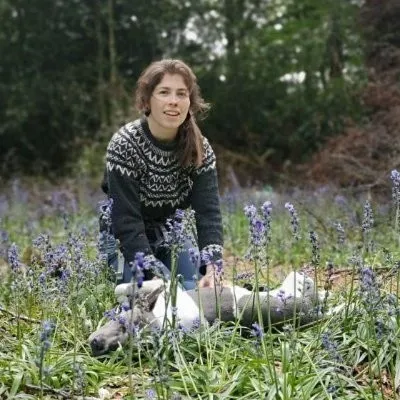
Linda Doyle
Linda is a facilitator, educator and strategist who has supported organisations to develop actionable strategies since 2019. She studied psychology in Scotland before completing a research master’s in social and behavioural science in the Netherlands. As a researcher and consultant at The Cynefin Co, she deepened her understanding of complexity science and how to apply it to creating change. That understanding shapes everything she does, from helping groups move beyond predict-and-control thinking to approaches that work in messy, real-world conditions.
She is driven by a deep interest in the psychology of social movements, in how structures like class and subculture shape the way people make sense of the world and in the traditions of popular education and radical pedagogy. What motivates her most is the design challenge: creating processes that meet people where they are and shift how they relate to each other and to their work.
She designs workshops for the group in front of her and adapts as she goes, so people leave with a clear path to putting their strategy into practice. She pays close attention to group dynamics and to who holds power in the room, and works to rebalance it where needed.
Wolfgang Wopperer
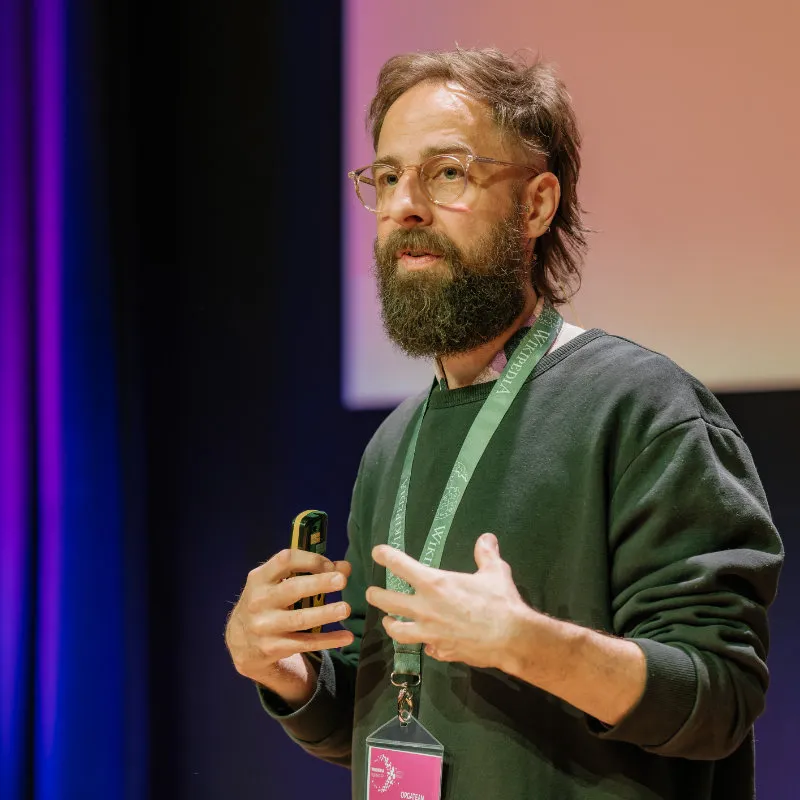
Wolfgang is a facilitator, organisational developer and researcher with a background in philosophy and political science. He has helped teams and organisations make sense of their situation, work out options for strategic action and take concrete steps to put them into practice. Along the way he co-created the Product Field, a sensemaking framework for product innovation used by organisations around the world, and the Value Cube, a framework for designing and analysing business models. With the collective, he co-designed and co-facilitated the deliberation process at the Wikimedia Summit 2024, where more than 170 Wikimedians from around the world worked out a collective position on the proposed Wikimedia Movement Charter.
He is driven by the question of how collective agency comes about: how groups, organisations and movements come to act as more than the sum of their members, and what that means for building power against a system that is very good at keeping people apart. His thinking draws on complexity science, philosophy and hegemony theory, and what motivates him most is turning it into things people can use – a sensemaking framework, a mapping tool, a way of reading the moment.
In the room, he connects ideas. He helps a group see how its members’ contributions fit together, turns what emerges into something the group can decide on and keeps an eye on the whole while people work through the detail. His sessions are carefully structured and highly visual, and he changes the plan when the group needs something else.
Our approach
Our approach is based on years of experience in different movements, where we learned about the importance and challenges of balancing diversity and coherence, autonomy and alignment – often the hard way.
It draws on complexity thinking, on research in fields from movement psychology to systems biology and on traditional practices of social coordination. Our understanding of movement ecology owes much to the Ulex Project and the work of Rodrigo Nunes.
Our values in practice
- Equity and justice.
- The systems we fight also live in us. We keep learning, reflecting and holding ourselves to account.
- Accessibility.
- Sliding scale fees, and sessions designed for a range of ways of learning.
- Collaboration.
- Working across movements to pool what we know, because each of us holds a different piece of the puzzle.
- Learning and experimentation.
- We treat our work as a series of experiments: try, reflect, adapt and say what did not work.
- Complexity thinking.
- The future cannot be predicted or controlled; change emerges from how the parts of a system interact. That calls for humility, an eye for unintended consequences and building the systems we want in how we work right now, because the purpose of a system is what it does.
- Radical pedagogy.
- Learning that starts from participants’ own experience – more below.
Our theory of change
Collective power comes from many groups pursuing different strategies whose interaction shifts the whole system. Power is held by alliances, and the side that builds the larger and more coherent alliance wins. So our work is alliance work. We help movements read their situation together, map their ecosystem and the power they face, work out where their combined weight can tip the balance and build the relationships that let them act together.
How we approach learning
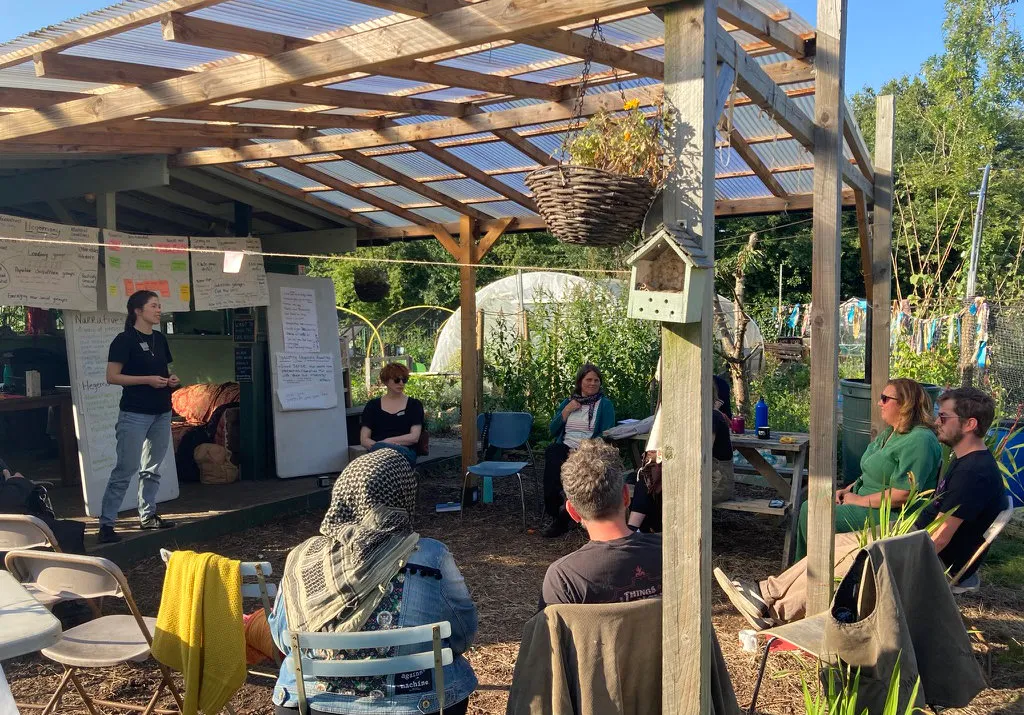
Our approach to learning draws on the popular education tradition: we start from participants’ own experiences and ideas, not from abstract theory handed down. Knowledge is generated together in the room, through structured reflection, peer exchange and hands-on exercises that make concepts tangible. We balance input with plenty of space for discussion, connection-making and application to participants’ own contexts.
The goal is not to transmit a curriculum but to build the capacity to think and act more effectively together. That is why popular education and radical pedagogy matter to us: participants experience building collective agency there and then, which is exactly the skill we need to practise to build the future we want.
We adapt our facilitation to the accessibility needs of each group. We work with several formats, such as games and visual facilitation, to suit different ways of processing information, and we check in regularly about pace, language and breaks.
Working with us
We use a sliding scale so that groups with very different resources can work with us. See our fees and how we work, or get in touch.